Two Weeks of Building a Vanuatu Second Passport File, Day by Day
It is 9:40 on a Tuesday morning, and I am sitting in a small photo studio waiting for the flash to stop firing. The photographer asks me to tuck my hair behind my ears and look straight ahead. This is not a holiday snapshot. It is the first step in a documented second passport file for Vanuatu, and every detail from here on needs to be deliberate. If you are at the same starting point, the travel visa and document guidance at vanuatupassportrequirements.com/travel-visas/ is the reference I used to plan the next two weeks.
What follows is a realistic day-by-day account of how the file comes together: the errands, the small decisions, the corrections, and the moment the envelope finally gets sealed.
Day 1: The Photo Studio and the Rules Nobody Reads First
The photo is the easiest item to get wrong. Vanuatu passport and visa photos follow strict specifications: a plain light background, a neutral expression, no glasses glare, and dimensions that match the application form. The studio I chose had a printed checklist on the wall, which told me this was not their first passport job.
I brought the printed photo rules with me and asked the photographer to confirm head size and background color before printing. We took three sets. One set went into a paper sleeve for the file, and the digital copy was emailed to me for any online submission. The photo must look like you on an ordinary day, not like a retouched portrait.
Back home, I created a single folder on my desk and labeled it with the date. Every document from this point onward went into that folder, in order. That one habit saved me hours later.
Day 3: The Police Certificate Request and the Waiting Game
Two days later, the focus shifted to the police certificate. This is the document that proves a clean record, and it is often the slowest item in the file. I downloaded the request form, filled it in by hand, and attached a copy of my ID and the photo set.
At the local office, the clerk checked my address history and asked whether I had lived in another country for more than a year in the past decade. That question matters because some applicants need a certificate from more than one jurisdiction. Start the police certificate early; it can take weeks, and everything else waits on it.
I paid the fee, got a receipt, and wrote the reference number on a sticky note inside the folder. The officer said the certificate would be mailed or available for pickup, and I marked a reminder on my calendar for two weeks out.
Day 5: Certifying Documents Without Wasting a Trip
By Friday, the folder held the photo set, the police request receipt, and a stack of identity documents. The next task was certification. Depending on where you apply, copies of your passport, birth certificate, and proof of address may need to be certified by a notary, a lawyer, or another authorized person.
I called the notary first to confirm which documents they would certify in one visit and what identification they required. The appointment took twenty minutes. Each copy was stamped, signed, and dated, and I checked that the certification wording matched what the application asked for. A certified copy that does not match the required wording is treated as if it were not certified at all.
One mistake I avoided: I did not certify the police certificate itself, because the issuing office provides it directly. Mixing up which documents need certification and which need to be originals is a common reason files get sent back.
Day 8: Reading the Form Twice and the Visa Question
The following Monday was form review day. I printed the application and filled it out in black ink, then read it again from the last page to the first. Reading backward catches skipped fields that reading forward hides.
This was also when I separated two ideas that are easy to confuse: a Vanuatu passport file and a travel visa. A passport proves identity and nationality; a visa grants permission to enter a country for a specific purpose and period. Some destinations allow visa-free entry for Vanuatu passport holders, while others require an application in advance. The travel visa section on vanuatupassportrequirements.com/travel-visas/ explains how those entry rules differ from the passport paperwork itself.
I listed every trip I had taken in the past five years and matched the dates to the stamps in my old passport. Inconsistent travel dates are a quiet but common error, and they are much easier to fix before submission than after.
Day 11: The Final Review and the Sealed Envelope
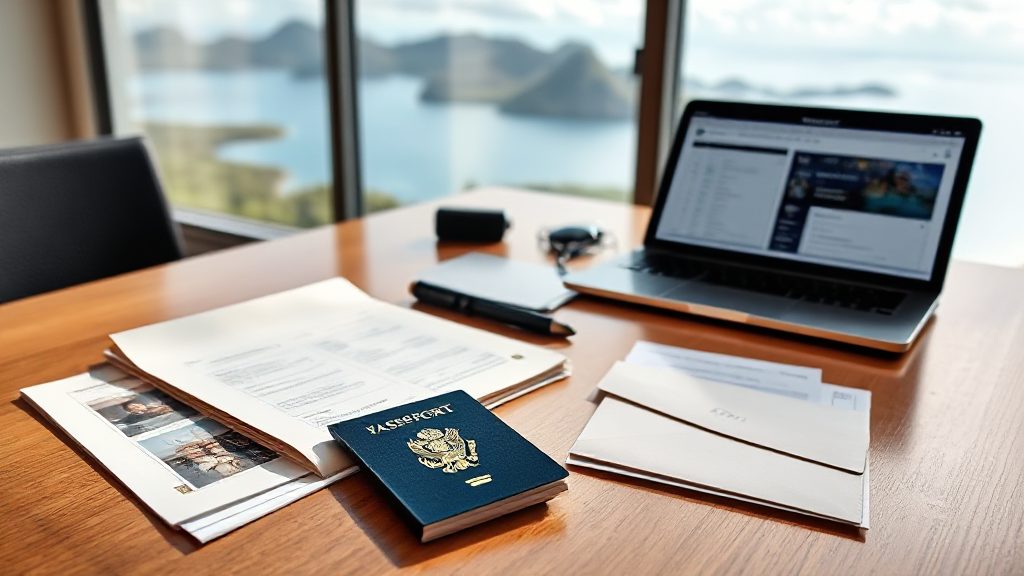
On Thursday, I laid every document on the table in the order the checklist listed them. Photo set, certified identity copies, police certificate, completed form, and the fee payment record. I made a photocopy of the entire package for my own records before sealing anything.
The last check was the signature and date. A missing signature on the final page can delay a file by weeks. I signed, dated, and slid the papers into a sturdy envelope, then wrote the reference number on the outside.
Two weeks earlier, this had looked like a pile of unrelated errands. Seen together, it was a sequence: photo first, police certificate in motion, certifications booked, form reviewed, and package assembled in order. The file is not hard because any single step is difficult; it is hard because the steps depend on each other.
If you are starting your own file, treat the first week as the setup week and the second as the verification week. Keep one folder, one checklist, and one calendar reminder for every pending item. By the time the envelope is sealed, the process feels less like bureaucracy and more like a project you actually finished.